
Mar 05, 2026
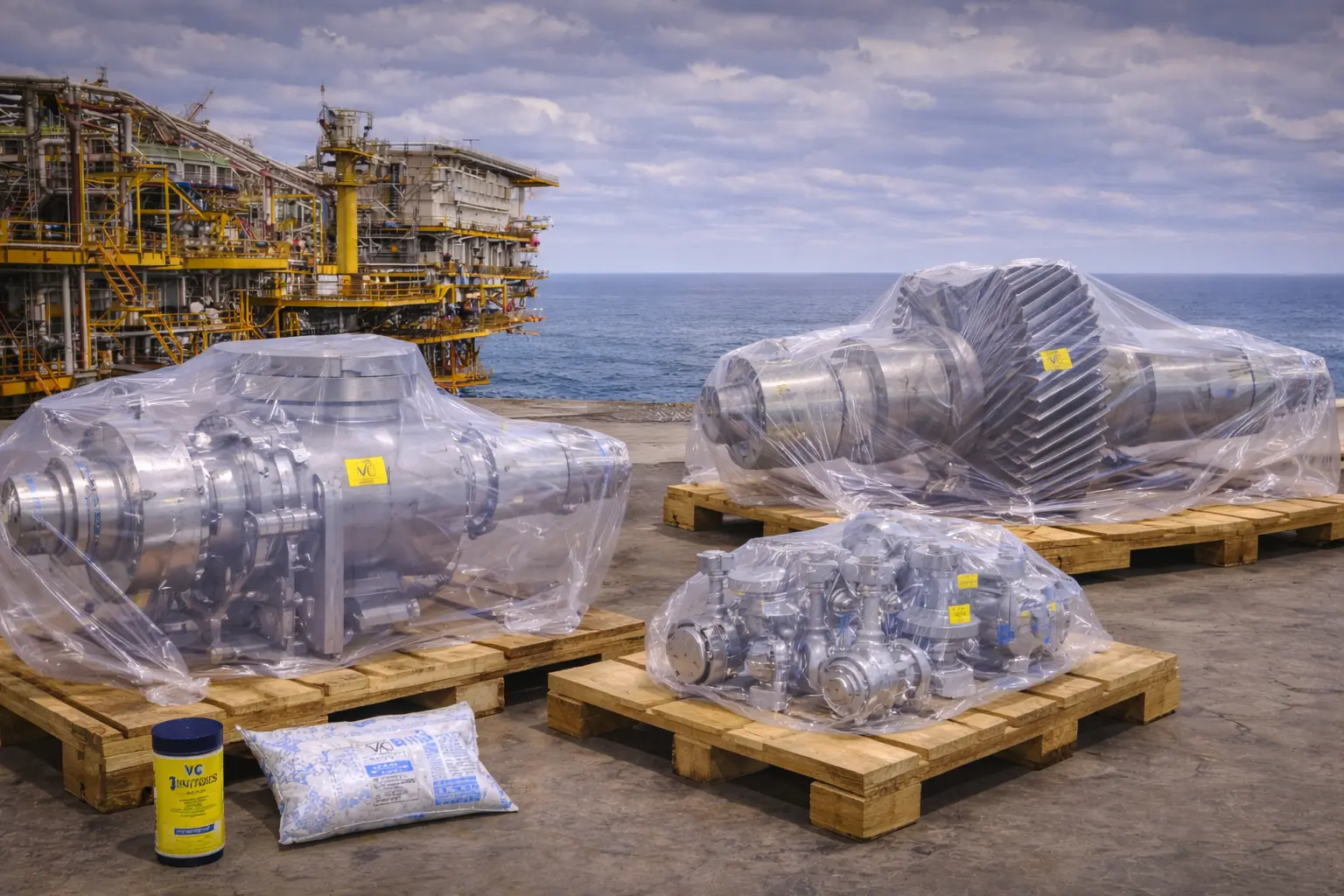
VCI shrink wrapping has become one of the most reliable and widely used methods for protecting industrial equipment during storage and transportation. In industries such as oil and gas, marine engineering, power generation, and heavy manufacturing, critical equipment must often remain in storage for extended periods. Without proper protection, these components can suffer from corrosion and environmental damage that compromise their performance.
VCI stands for Vapor Corrosion Inhibitor, a technology designed to prevent corrosion by releasing protective vapors into the surrounding environment. When metal components are enclosed in VCI packaging, these vapors form a microscopic protective layer on metal surfaces, preventing moisture and oxygen from reacting with the metal. This process effectively stops corrosion before it begins.
The VCI shrink wrapping process begins with proper equipment preparation. Components are first cleaned and inspected to ensure that all contaminants, moisture, and residues are removed. Once the equipment is clean and dry, preservation technicians apply protective oils or corrosion inhibitors if required.
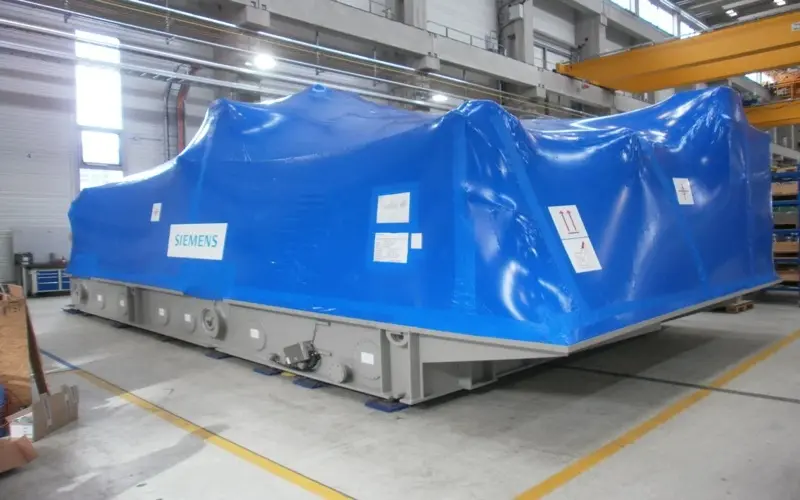
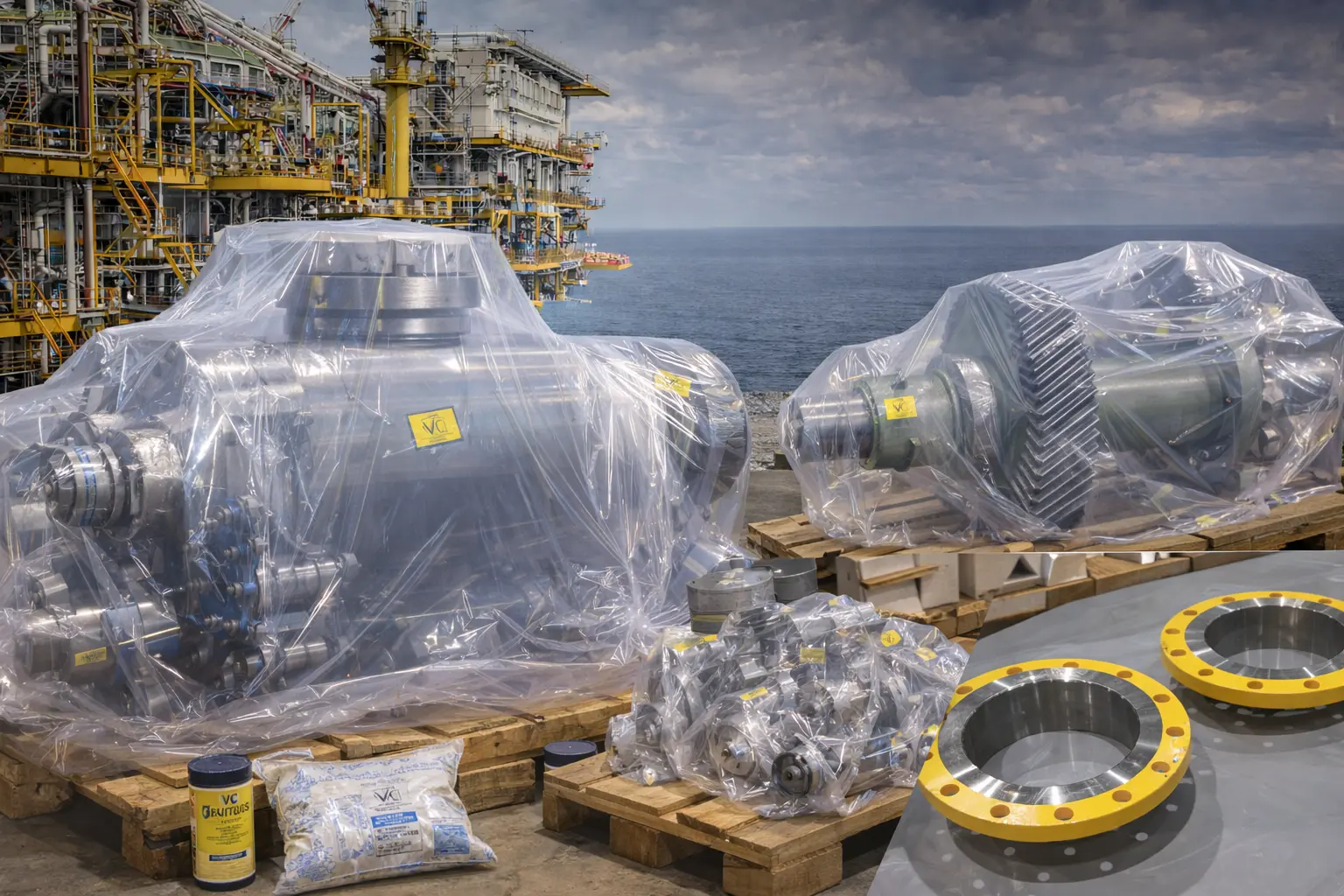
The equipment is then wrapped with specialized VCI film designed for industrial preservation. This film is heated during the wrapping process, causing it to shrink tightly around the equipment. The result is a sealed protective barrier that shields the equipment from environmental exposure.
VCI shrink wrapping offers several advantages compared to traditional preservation methods. First, it provides long-term corrosion protection without the need for constant maintenance. Second, the packaging can be easily removed when the equipment is ready for installation. Finally, VCI materials are environmentally friendly and safe to handle.
This method is particularly useful for large mechanical equipment such as valves, pumps, turbines, drilling components, and structural assemblies. By creating a sealed environment around the equipment, VCI shrink wrapping ensures that internal and external surfaces remain protected during storage or transportation.
In addition to shrink wrapping, preservation teams often use desiccants and humidity indicators to monitor environmental conditions inside the packaging. These tools help ensure that moisture levels remain within safe limits and that the preservation system continues to function effectively.
As industrial projects become more complex and equipment values increase, the importance of reliable preservation methods continues to grow. VCI shrink wrapping provides an effective and cost-efficient solution that protects valuable equipment from corrosion and environmental damage.
Mar 05, 2026
Mar 05, 2026

HCC is dedicated to preserving your valuable assets and ensuring operational efficiency. Safety is a top priority, toolbox talks are conducted daily p...
Copyright © 2026 HCC. All rights reserved.